A breaker that trips repeatedly is reporting one of three things - an overloaded circuit, a short or ground fault, or a breaker at the end of its own life - and each has a different remedy.
Problem: A breaker that trips repeatedly is reporting one of three things - an overloaded circuit, a short or ground fault, or a breaker at the end of its own life - and each has a different remedy.
Solution: Work the order: note what was running, unplug the circuit's loads, reset once, and read what the breaker does next. Its behavior is the diagnosis's first chapter.
When to call: Call when the breaker trips instantly on reset, trips with a smell, sound or heat, or protects a circuit you cannot identify - those are faults, not inconveniences.
Every Oklahoma City summer produces the same call: a breaker that trips, gets reset, and trips again - in the kitchen at dinner, in the bedroom when the space heater joins the circuit, at the panel during the season's first real heat. It feels like one problem and it is actually three, wearing one symptom. This guide is the disciplined way to sort them: what the breaker is protecting you from, what to check in what order, and exactly where the homeowner's part ends.
The Oklahoma City Angle
The second force is the modern load arriving in old houses. Electric vehicle chargers, hot tubs, home offices, workshop tools and added living space all draw on panels that were sized for a fraction of today's demand - a 100-amp service that was generous in 1955 is an arithmetic problem in a house with two chargers and a spa. Much of the metro's electrical work is this reconciliation: reading what a house now asks of its system, and matching the system to it honestly.
Start With What a Breaker Actually Does
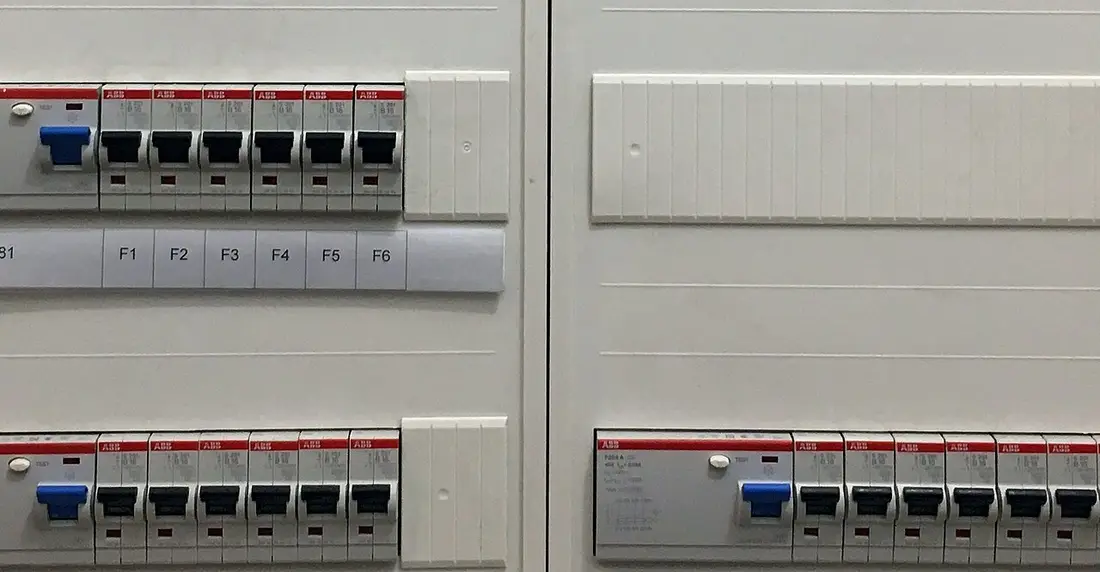
A breaker is a guard, not a switch that happens to be fussy. It watches its circuit for two betrayals: too much current for the wire it protects, sustained long enough to heat the run, and the sudden flood of a short circuit or ground fault. When it trips, it is filing a report in the only language it has. Resetting it without reading the report is like clearing a smoke alarm to hear the television better.
That framing changes the troubleshooting entirely. The question is never 'how do I stop it tripping' - the breaker is stopped from tripping by removing what it objects to, and its objections are the diagnosis. A circuit can be honestly overloaded by modern life: the microwave, the air fryer and the coffee maker on one 20-amp kitchen run is not a defect, it is arithmetic. Or the objection can be a fault developing in a wall. The sort between those two is the whole subject of this guide.
The Three Causes, and How They Announce Themselves
Overload trips take time - minutes of combined load before the breaker lets go, because heat in the wire and the breaker builds at the load's pace. The signature is company: it trips when specific things run together, resets cleanly, and holds until the combination returns. Short circuits and ground faults trip instantly, often with a pop, sometimes with a mark at a device, because the current spike is immediate. The breaker's own failure is the third actor: a breaker that trips under light load, will not reset firmly, or feels warm and loose in its seat is confessing about itself.
Location sharpens the read. Kitchen and laundry trips are usually arithmetic - modern appliances on circuits drawn for fewer of them. Bedroom trips in winter are the space heater's signature. A circuit that trips in storm weather, or when a specific outlet is used, or after a decade of silence, is telling a fault story, and fault stories are read with instruments, not experiments. Note also the panel's age: in the metro's flagged postwar panel families, a breaker's failure to trip can matter as much as its tripping, which is why a panel whose make you do not know deserves identification before troubleshooting proceeds far.
PROBLEM
→
SOLUTION
The Checks That Are Yours to Make
Your half of the diagnosis is observation, done in order. First, the inventory: what was running, in which rooms, when it tripped - written down, because the pattern is evidence and memory edits it. Second, unload the circuit completely, reset the breaker once, and restore loads one at a time; an overload confesses by tripping only at a specific combination, and you will have found its arithmetic. Third, the senses: any smell at an outlet, any warmth on a plate, any discoloration, any device that crackles - each moves the circuit out of the experiment category instantly.
And then stop, at a well-marked line. A breaker that trips instantly on reset with everything unplugged is reporting a fault in the run itself - not a device, not an overload - and there is no homeowner step beyond leaving it off. A breaker that will not reset, or resets soft and hot, is reporting itself. Both reports go to a professional with the panel open. The discipline is knowing that your observations have already done the expensive half of the diagnosis: they have sorted the three causes into one, and the visit starts from your notes.
Why the Same Breaker Earns Different Verdicts on the Same Street
Two adjacent houses can honestly receive opposite tripping-breaker verdicts, and the reasons are structural: one home's circuit is overloaded by a modern kitchen living on a 1960s run, the other's fault is a connection loosening inside a wall; one panel is a sound modern unit, the other is a flagged postwar family whose breaker behavior is the story itself. Verdicts that respect those variables look inconsistent from the sidewalk and are consistent in the instruments.
This is also why 'my neighbor just replaced the breaker' is evidence but not proof for your address. It proves the symptom is common this season. What it is in your house, at your panel's age, on your circuit's load, is a separate measurement - and it is the measurement, not the street's consensus, that your remedy should follow.
The Readings and What They Mean
The diagnosis has a grammar owners can learn: the load reading says whether the circuit's life exceeds its design; the clamp meter on the panel says what each circuit actually draws at the dinner hour; the insulation and connection checks say whether the run itself is sound. A vague verdict - 'it's the panel' - unaccompanied by any of these is not a diagnosis but a guess in uniform.
Homeowners can ask one clarifying question that separates the two: 'show me what this circuit draws, and what it should.' A real assessment answers it in the circuit's own terms. Treat the answer - or its absence - as the assessment's true executive summary.
Myth vs Fact
The Myth
If the breaker resets and holds for a while, it was probably nothing - a glitch in the breaker itself. Owners reset, watch the lights stay on, and file the event under household mysteries.
VS
The Fact
A breaker that trips is reporting a measured condition, every time. Overload, fault or the breaker's own wear - each is real, each is findable, and none of them is a glitch. The reset buys time to read the report; it does not erase it.
The Related Service, In Depth
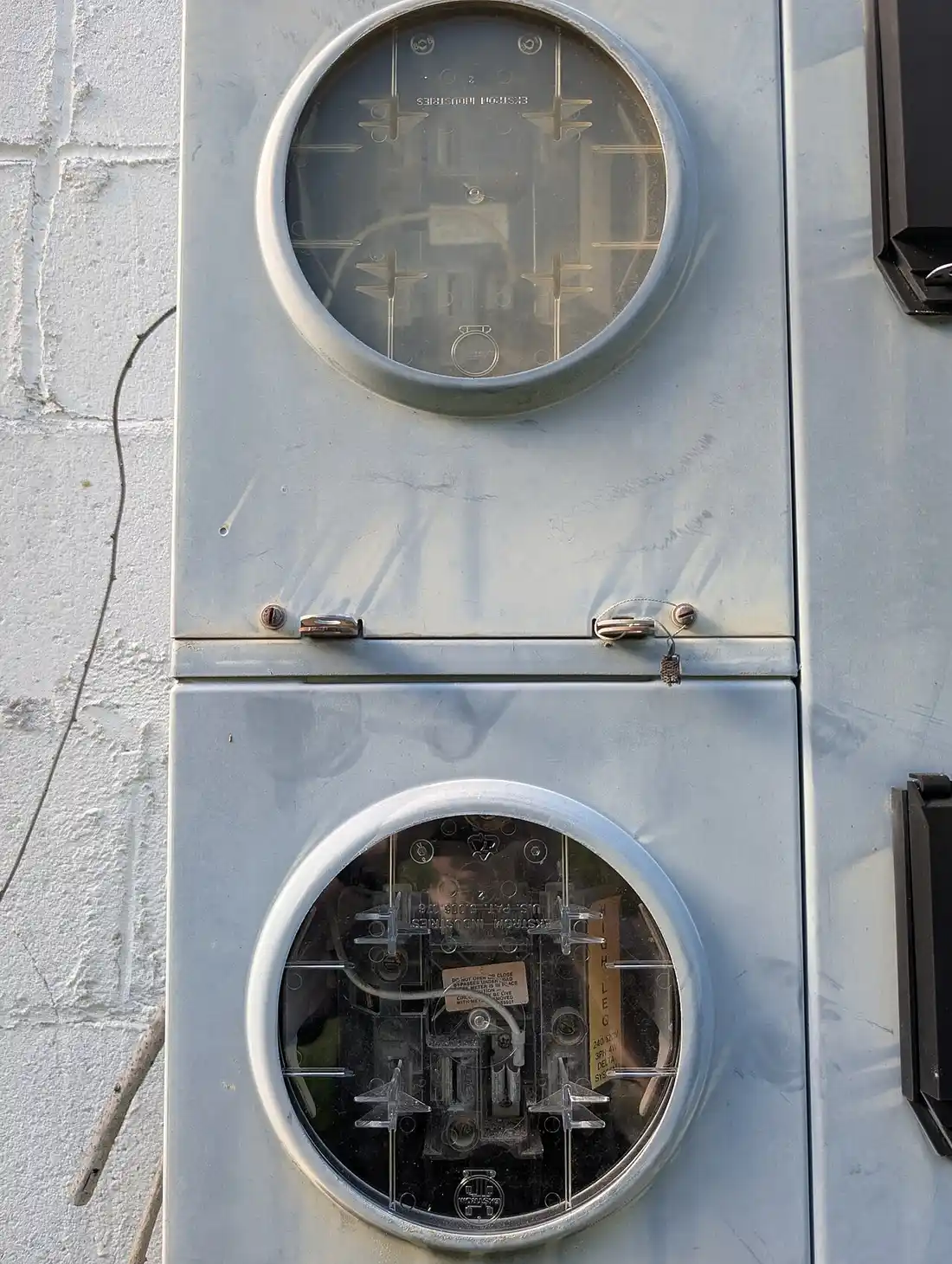
A panel upgrade should be judged the way the house will judge it: on the hottest evening of July, in the third storm week of May, with the charger running and the dryer tumbling. By that measure, the panel's label is the junior partner. The senior partners are the load calculation, the grounding, the condition of the mast and meter base, and the honesty of the directory - the invisible work that decides whether the visible cabinet ever gets to show what it can do.
That is the service side of this guide's subject. When you are ready, the Breaker Panel Upgrade page carries the process, the coverage by neighborhood and the number to call.
The Process, Step by Step
Write the pattern down
Room, circuit if known, what was running, time and weather. The pattern is the diagnosis's first half.
Unload and reset once
Everything on the circuit unplugged or off, breaker reset a single time. Instant re-trip with no load means stop here.
Restore loads one at a time
An overload names itself at a specific combination. Note the combination; it sizes the remedy.
Read the devices
Smell, warmth, discoloration and sound at outlets and switches move the circuit from experiment to appointment.
Prevention Checklist
Keep the panel directory honest, so a tripped breaker names its circuit instead of starting an investigation.
Spread kitchen and laundry loads across circuits deliberately; modern appliance clusters outdraw the circuits of older layouts.
Give space heaters their own lightly loaded circuits in winter, and never a power strip.
Treat the first repeated trip as the appointment to make - in the calm week, not the storm week.
Have the panel's make and era identified before troubleshooting a frequent tripper in an older home; the panel itself may be the story.
A Field Checklist for Your Own Home
Log the trips with dates, times and what was running for two weeks.
Reset once when a breaker trips; if it trips again quickly, leave it off and treat that as the finding.
Note whether the same hours recur - dinners, laundry days, storm afternoons - and tell the person you call.
Keep the panel's make and a photo of its schedule card in the house file for every conversation about it.
What the Paperwork Should Show
The diagnostic visit usually stays inside one long appointment: pattern interview, panel readings with the household running its loads, breaker behavior checked, and the suspect run's devices sampled where the readings point. Replacement breakers, panel work or run repairs are separate work, scheduled with their own paperwork when they involve the panel or the service. A visit that ends in an overload verdict often ends with the simplest remedy of all - loads redistributed and the arithmetic explained.
What owners should hold ready is the pattern log and access: the panel clear of storage, the attic or crawl entry reachable if a run is suspect, and the household's big loads available to run on request. Diagnoses shortened by access are the same diagnoses made cheaper - the readings are identical, only the hunting is saved.
How a Professional Works This Problem
A professional works this problem in the panel, with a clamp meter and the household's pattern log open beside it: the circuit's draw measured against its rating at the hour it trips, the breaker's behavior and seat read as evidence, the run's devices inspected in the order the pattern suggests. The amateur's shortcut is the replacement breaker bought on hope; the professional's discipline is excluding the causes in writing, so the verdict - overload, fault or breaker - is a finding, not a preference.
Mistakes That Make It Worse
Resetting the breaker daily for a season and calling it management: The report does not expire; the protection does, one trip at a time.
Moving the offending appliance to another circuit and declaring victory: The arithmetic moved with it, and now two circuits have a story.
Replacing the breaker without measuring the circuit: A new guard on an overloaded run trips on the same schedule and teaches the household to ignore both.
Ignoring the panel's make while troubleshooting: In a flagged postwar panel, the breaker's behavior is the least reliable witness in the case.
The Bottom Line
A tripping breaker is a guard doing arithmetic out loud. Hear it properly once - measured, named, written down - and you will never have to hear it weekly again.
Metro outages are written by documented weather: spring supercells, the May 1999 and May 2013 tornadoes on the south side, and ice storms in December 2007 and October 2020 that darkened districts for days.
A home charger is among the largest continuous loads a house carries, so installation starts with a load calculation at the panel - the arithmetic that decides the charge rate your house can honestly feed.
My breaker trips every few days but resets fine. Is that dangerous?
It is a report, and reports age badly. A breaker that trips on a schedule is usually an overloaded circuit announcing its arithmetic or a breaker wearing out - both manageable today, both worse later. The dangerous versions are the instant trip, the hot breaker and the trip with a smell; the every-few-days version is your invitation to have it read while it is still polite.
Can I just install a bigger breaker so it stops tripping?
No - that removes the protection the wire was sized for and keeps the overload. The breaker is not the circuit's opinion of how much current it would like; it is the wire's limit, enforced. If the arithmetic says the circuit is too small for the life lived on it, the remedies are load changes or a new circuit, never a bigger guard.
Why does the breaker trip only on hot afternoons?
Because heat is additive. A circuit and breaker already warm from a hot garage or attic, carrying the air-conditioning era's full load, reach their trip point sooner than the same load on a mild day. Summer trips that vanish in October are capacity reports with a thermometer attached - worth an honest load read rather than a season of resets.
When does a tripping breaker become an emergency?
When it trips with a pop, a smell, a scorch mark or a sound; when it will not reset at all; when the panel itself is warm or buzzing; or when the circuit feeds something the household cannot safely lose while it waits. Those move the call from the schedule to the moment, and the breaker stays off until it is read.
Please note: Oklahoma City Electrician is an independent directory and referral service, not an electrical contractor. The professionals reachable through this site are independent businesses; any agreement for work is between you and the professional you engage. Service information on this site is general educational material - the scope of any real electrical work is set by an on-site inspection.
A Breaker That Keeps Tripping, Lights That Flicker or a Panel Due for an Upgrade?
One call connects you with an electrical professional serving Oklahoma City and the surrounding metro communities - assessment, repair, service and installation.