Oklahoma City Electrical Services

Whole-Home Rewiring in Oklahoma City, OK

Whole-home rewiring in Oklahoma City - knob-and-tube and cloth wiring retired, aluminum-era circuits renewed, and old houses brought to a wiring system that matches modern loads.

The storm ledger is documented, not folklore. On May 3, 1999, an F5 tornado crossed Bridge Creek and Moore with winds measured above 300 miles per hour; on May 20, 2013, an EF5 crossed Newcastle and Moore on a similar path. Ice storms in December 2007 and October 2020 brought down lines and trees across the metro and left neighborhoods dark for days. Oklahoma also sits in one of the more lightning-active regions of the country. Surge damage, standby power and service-mast condition are standing topics here because the record made them so.

The second force is the modern load arriving in old houses. Electric vehicle chargers, hot tubs, home offices, workshop tools and added living space all draw on panels that were sized for a fraction of today's demand - a 100-amp service that was generous in 1955 is an arithmetic problem in a house with two chargers and a spa. Much of the metro's electrical work is this reconciliation: reading what a house now asks of its system, and matching the system to it honestly.

Signs You Need Whole-Home Rewiring

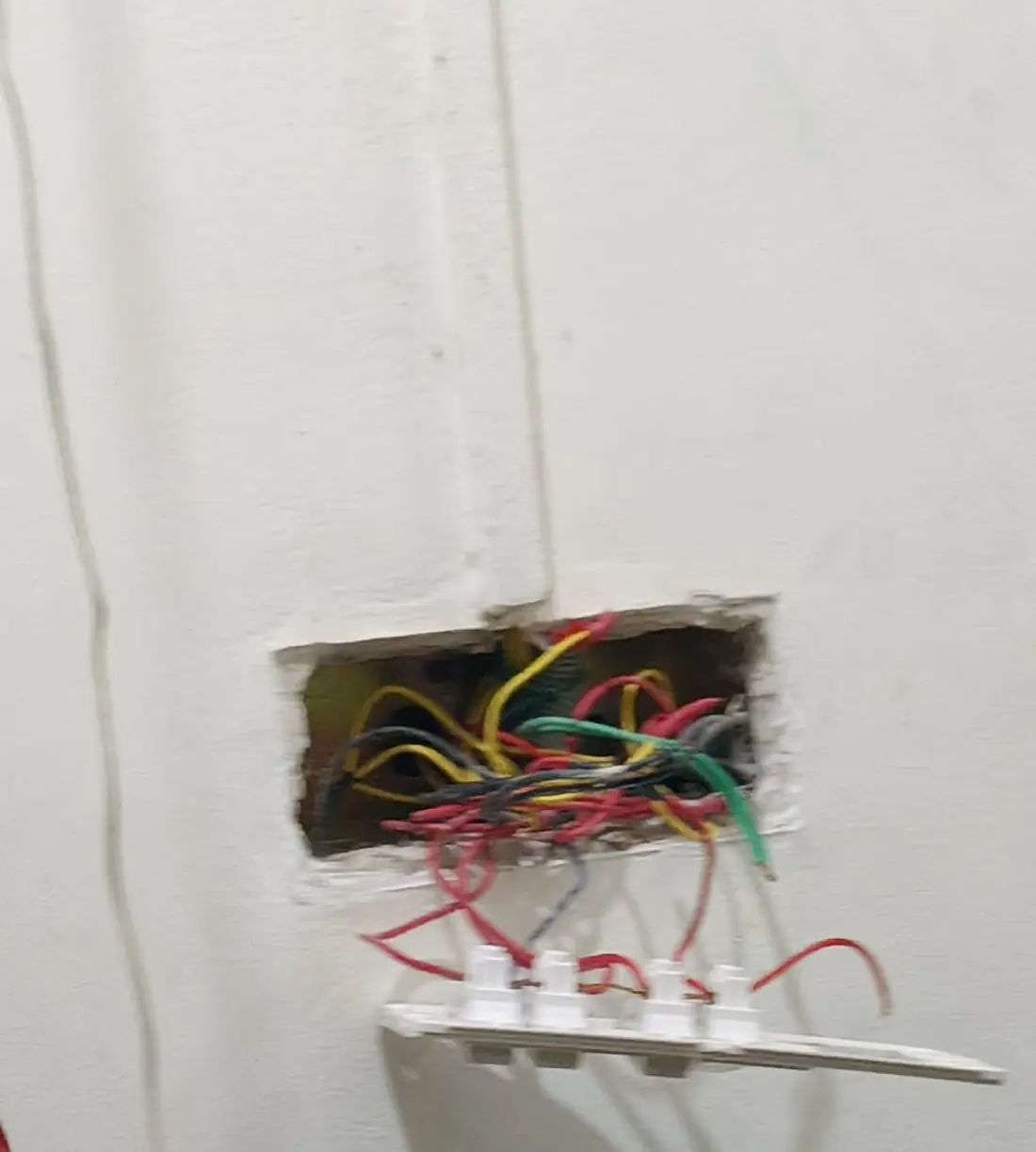
Knob-and-tube wiring is still live

Knob-and-tube was good work in its day, but its day assumed no insulation buried over it, no modern loads and no century of attic heat. Live knob-and-tube in a modern house is a retirement that is overdue.

Cloth insulation is cracking or gone

Cloth-insulated cable from the early decades ages by crumbling. Where the insulation has gone brittle, the conductor's protection has effectively retired before the conductor did.

Two-prong outlets throughout

A house with no grounded outlets is telling you its wiring predates grounding practice - and every adapter and cheat plug since has been a workaround, not a repair.

Aluminum branch wiring symptoms

In the aluminum-era homes, warm outlets, flickering on one circuit and devices that fail early are the connection story of that wiring type - and they argue for renewal of the affected circuits, not another device swap.

Circuits that make no sense

One breaker feeding half the house, rooms split across three circuits, junctions buried where no one can reach them - a wiring map that cannot be drawn is a wiring system asking to be redrawn.

A renovation is opening the walls anyway

Remodels are rewiring's natural window: the walls are open, the electrician can run clean circuits, and the cost of doing it now is a fraction of doing it through finished rooms later.

Why Whole-Home Rewiring Is a Standing Job in Oklahoma City

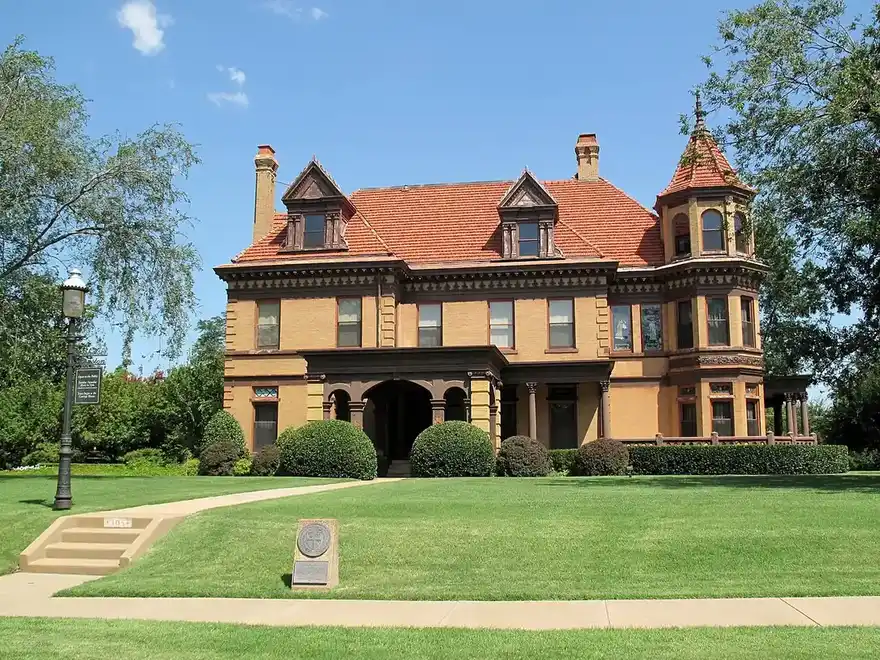
Oklahoma City's rewiring map is its founding map. The streetcar suburbs - Heritage Hills, Gatewood, Mesta Park, Capitol Hill and their kin - were wired in the knob-and-tube era and rewired, partially, in every decade since. The result is the layered house: a 2000s kitchen on a modern circuit, a 1915 bedroom on its original run, and a panel trying to describe both in one directory.

The aluminum era wrote the second chapter. From the mid-1960s into the mid-1970s, subdivisions across the metro - Quail Creek, The Village, the south side, the Tinker suburbs - were wired in aluminum branch circuits. That wiring's weakness is its connections, and its renewal, by rewire or by approved remediation, is the defining electrical project of those neighborhoods' middle age.

Storms and insurance keep the schedule. Attic heat bakes old insulation every summer; insurers ask harder questions about old wiring every renewal cycle; and each renovation opens one more wall that shows the truth. Rewiring done on the owner's calendar, room by room with a plan, is a different experience from rewiring ordered by events.

Whole-Home Rewiring Through the Oklahoma City Year

Summer is the load season. Air conditioning runs from morning to past midnight across the metro, panels carry their heaviest sustained draw of the year, and the weak points announce themselves: breakers that trip on hot afternoons, connections that warm under load, attic wiring baking in the day's heat. Lightning rides the same months. Most electrical failures are discovered in summer - the wear happened across years, and the peak-load week is simply when the margin runs out.

Winter in Oklahoma City is mild until it is not: the ice storms are the season's defining electrical events, when coated lines and falling limbs take down drops and masts across whole districts at once. Between storms, the winter load story is space heaters on bedroom circuits, holiday lighting on old exterior outlets, and heating equipment running its longest hours - each a small test of circuits that sit idle the rest of the year.

Spring is storm season and preparation season at once. March through May is the peak of the supercell calendar, when the metro's outages, surge events and downed service drops concentrate. The electrical work that matters happens just ahead of it: panels checked, surge protection in place, standby generators serviced and exercised, and trees near the service drop reported before the wind finds them. The first big storm week of the year grades every home's preparation without mercy.

Whole-Home Rewiring in Depth

A rewire is best understood as the house's electrical biography being rewritten in one edition. The old volumes remain in the record - the mapping of what was found, where it ran, why it was retired - but the working text becomes a single era: circuits drawn for the house as it is lived in, landed on a panel that can describe them truthfully.

It is also the job where staging decides the experience. The same scope can be an evacuation or a sequence of calm, powered rooms, depending on whether the plan was drawn room by room before the first run. Owners should judge rewiring proposals by their staging plans as much as their totals, because the plan is what the household will actually live inside for the project's duration.

Choosing the Right Help

Choose rewiring help by the staging plan. The scope of a rewire is knowable in advance; the experience of living through it is a design choice, made in the plan: which rooms, in what order, with power maintained how, and the house's finishes protected by what methods. Proposals that lead with the plan are the ones written by people who have lived the alternative - usually in someone else's house, at the owner's expense.

The Conditions Behind It

Oklahoma City sits on the southern plains where Gulf moisture runs into dryline storms, and the weather writes the electrical calendar here: a spring supercell season that tests every service mast and overhead drop in the metro, a summer of peak cooling loads, a second severe season in the fall, and winters that can wrap the whole city in ice. An electrical system in Oklahoma City is not judged on a mild day - it is judged in the storm weeks, and the pages here are organized around that.

The metro's wiring is a layered archive of its building history. The streetcar suburbs of the 1900s through the 1930s still hold knob-and-tube runs, cloth-insulated cable and fuse boxes. The postwar decades built whole districts on 100-amp panels, including panel families from that era that inspectors now flag on sight. The mid-1960s to the mid-1970s added aluminum branch wiring to thousands of homes. And the growth edges build at 200 amps with chargers and standby generators planned from the start. Which layer a house sits in decides most of its electrical story.

How Whole-Home Rewiring Works

Map the existing system

Every circuit traced, every era of wiring identified - attic, walls and crawlspace read as one archive - before a single run is planned.

Draw the new system

Circuits laid out for the house as it is lived in now: kitchen loads, baths, chargers and offices given their own runs, the directory written before the wire is.

Rewire in stages

The work proceeds room by room or system by system, with power maintained where the plan allows and the house never left in a condition it cannot sleep in.

Document the finished system

New directory, labeled panel, and the record of what was retired - the file the next century of owners will thank you for.

Doing It Yourself vs a Professional

The DIY Route

  • Partial DIY rewiring leaves the house with three wiring eras instead of two - and no map of which is which
  • Tying new cable into old knob-and-tube or cloth runs marries new work to the weakest link in the house
  • Skipping permits and inspection on a rewire erases the paper trail that insurers and buyers will ask for later
VS

The Professional Route

  • Starts with the full map - every era identified, every circuit traced - so the plan covers the house, not the symptom
  • Stages the work around a lived-in house, with the sequence agreed before the first wall opens
  • Finishes with documentation: the directory, the map and the record of what was retired

Keep It From Coming Back

Wiring that will serve another century still needs its courtesies: knowledge of what is in the walls, and the discipline not to bury its weaknesses under new work. These habits protect old houses between projects.

  • When a wall opens for any reason, have the wiring inside it read - it is the simplest inspection you will ever get.
  • Do not bury old wiring under new attic insulation; insulation over knob-and-tube is the combination its designers never planned for.
  • Keep a wiring file: every era identified, every circuit mapped, every project dated. The file compounds in value at every sale and renewal.
  • Address the aluminum-era connections before the symptoms start; that wiring announces itself quietly first.
  • Match the renovation sequence to the wiring: electric before the walls close, always.
  • If you are buying an older home, have the wiring eras identified before closing - it is the one system whose condition changes the price conversation honestly.

Whole-Home Rewiring in the Surrounding Communities

The communities around Oklahoma City share its storm seasons and its lightning - with their own twists of housing age, growth and grid exposure.

Whole-Home Rewiring in Edmond

Edmond is the metro's northern anchor city, a station stop founded with the 1889 land run that has grown into one of Oklahoma's largest cities around the University of Central Oklahoma and its Old North tower. Its housing runs in rings: pre-war streets near downtown and the university, postwar and golf-course subdivisions through the middle decades, and large-lot and new construction toward Arcadia Lake and the Logan County line.

Whole-Home Rewiring in Norman

Norman is the metro's southern anchor, a land-run city built around the University of Oklahoma, whose Bizzell Library and South Oval sit a few blocks from the pre-war neighborhoods of the original townsite. Game-day Norman and everyday Norman share the same streets: student rentals and faculty houses near campus, postwar subdivisions through the middle, and growth pushing east toward Lake Thunderbird.

Whole-Home Rewiring in Moore

Moore is the south-metro city between Oklahoma City and Norman, and it is the metro's tornado landmark: the May 3, 1999 F5 and the May 20, 2013 EF5 both crossed the city, and whole districts were rebuilt after each. Old Town's pre-war blocks, the postwar subdivisions around them, and the rebuild neighborhoods stand side by side, and Moore's building stock cannot be understood without the storm map.

Whole-Home Rewiring in Midwest City

Midwest City was founded in 1942 as a purpose-built community for Tinker Air Force Base, one of the first planned suburbs of its kind in the country, and the base still anchors its economy along SE 29th. Its original housing is wartime and postwar construction at scale - whole districts of similar houses built in a handful of years - with later decades of subdivisions filling in around them.

Where Whole-Home Rewiring Is Needed Most

In the historic core and the central neighborhoods - Downtown Oklahoma City, Bricktown, Midtown, Heritage Hills, Paseo Arts District and Uptown 23rd, Crown Heights, Belle Isle, Gatewood, Nichols Hills - the wiring runs from knob-and-tube and fuse boxes in the pre-war districts to the flagged postwar panels of the in-city suburbs, and whole-home rewiring follows that record: era wiring care on the old streets, panel decisions in the postwar blocks, and storm exposure that grows toward the open edges.

Across the north side, the lake country and the inner ring - The Village, Quail Creek, Warr Acres, Lake Hefner, South Oklahoma City, Capitol Hill and Stockyards City, Adventure District, Bethany, Mustang, Yukon, Piedmont - sit the growth waves of the 1960s onward, the aluminum-branch-wiring years and the first subdivisions wired for modern loads room by room, which together make this the steadiest whole-home rewiring territory in the metro.

Beyond the city line, the same work runs in Edmond, Norman, Moore, Midwest City, Del City, Deer Creek - fast-growing suburbs, university and base communities and prairie-edge towns where new construction, acreage homes and wide-open storm exposure add their own chapters. Every one of these area pages carries the local detail for whole-home rewiring in that community.

Coverage, In Full

Whole-Home Rewiring runs across the whole service map: Downtown Oklahoma City and Bricktown; Midtown and Automobile Alley; Heritage Hills and Mesta Park; the Paseo Arts District; Uptown and NW 23rd; Crown Heights; Belle Isle; Gatewood and the Plaza District; Nichols Hills; The Village; Quail Creek; Warr Acres; the Lake Hefner shore; South Oklahoma City; Capitol Hill; Stockyards City; the Adventure District; and beyond the city in Bethany, Mustang, Yukon, Piedmont, Edmond, Norman, Moore, Midwest City, Del City and Deer Creek. One call covers all of it - the local pages above carry the detail for each. If your street is not named here, call anyway: routes grow with demand, and most metro addresses are already within reach of a scheduled run.

From the Oklahoma City Electrical Guides

Old Wiring in Oklahoma City Homes: Knob-and-Tube, Cloth and Aluminum

Oklahoma City homes carry four wiring eras: knob-and-tube and cloth cable in the pre-war districts, postwar copper with its era's panels, aluminum branch wiring from the mid-1960s to mid-1970s, and modern copper since. Each era has a known behavior: knob-and-tube ages by insulation and burial, cloth by crumbling, aluminum at its connections. The remedy follows the era, not the symptom.

Read the Guide

Fuse Box or Breaker Panel? A Guide for Oklahoma City Homeowners

Fuses protected houses honestly for decades, but a fuse box cannot carry modern loads, modern protection types, or most insurance conversations - its replacement is a matter of timing, not debate. The decision inputs are concrete: the box's capacity against the house's loads, the availability of its fuse types, the insurance position, and the projects - chargers, spas, additions - queuing at its door.

Read the Guide

GFCI Outlets: Where They Belong, Why They Trip and What to Do

A GFCI watches for current leaking out of its proper path - through water or a person - and cuts power in a fraction of a second. It guards people, where a breaker guards wire. One GFCI commonly protects a whole string of outlets, which is why a tripped or failed unit in a bathroom or garage can darken outlets rooms away.

Read the Guide

Whole-Home Rewiring Questions

What affects the cost of rewiring in Oklahoma City?

The house's size and construction, attic and crawlspace access, how many circuits and devices, how much finish work the runs must cross, the panel work that goes with it, and the permit scope. A two-story plaster house and a one-story ranch are different projects wearing one name; real numbers follow the mapping visit.

How long does a whole-home rewire take?

It scales with the house and the staging: an accessible ranch measured in days, a two-story historic home measured in weeks of sequenced work. The schedule is set at the planning visit, room by room, so the household can plan around it - and the plan includes which rooms are live at every stage.

Will rewiring damage my historic home's finishes?

The craft of old-house rewiring is exactly that question: attic-fed runs, fished walls, baseboard and closet routes chosen to keep plaster and trim intact wherever the structure allows. Some access is unavoidable; a plan that names it in advance, room by room, is the difference between a careful rewire and a demolition with wire in it.

Should the panel be upgraded at the same time?

Almost always, the two projects belong together: new circuits deserve a panel with the capacity and protection to serve them, and the panel work is at its most efficient while the system is open. The assessment sequences them as one project with one permit story and one final directory.

Does my Oklahoma City home really need a full rewire, or can it be partial?

Many homes land honestly in the middle: the worst eras retired, the sound runs kept, the kitchen and baths brought fully current. The map decides - a house whose knob-and-tube feeds two closets is a different project from one whose aluminum wiring feeds every bedroom. A full rewire is prescribed by the evidence, not by the age of the house alone.

How disruptive is rewiring a lived-in Oklahoma City home?

Managed well, it is a staged project rather than an evacuation: attic and crawlspace runs first, wall fishing where finishes allow, rooms taken in sequence with power restored as each stage closes. Dust and access holes are real; chaos is optional. The plan - agreed in writing before work starts - is what separates the two experiences.

What does rewiring do for my insurance and resale position in Oklahoma City?

It removes the question. Documented modern wiring - with permits, a labeled panel and a wiring file - is the version of the house that insurers underwrite calmly and buyers pay for without a price argument. Undocumented work, however good, cannot make that claim, which is why the paperwork is treated as part of the job.

Can aluminum wiring in Oklahoma City be fixed without a full rewire?

The affected circuits can be remediated at their connections by approved methods, which addresses the wiring type's known weakness at the devices. Whether remediation or rewiring is the honest answer depends on the circuit's condition and the symptoms it has shown - overheated devices argue for renewal, quiet ones may be remediated. The assessment reads the connections themselves before prescribing.

Please note: Oklahoma City Electrician is an independent directory and referral service, not an electrical contractor. The professionals reachable through this site are independent businesses; any agreement for work is between you and the professional you engage. Service information on this site is general educational material - the scope of any real electrical work is set by an on-site inspection.

A Breaker That Keeps Tripping, Lights That Flicker or a Panel Due for an Upgrade?

One call connects you with an electrical professional serving Oklahoma City and the surrounding metro communities - assessment, repair, service and installation.

📞 Call Now
📞 Call Now