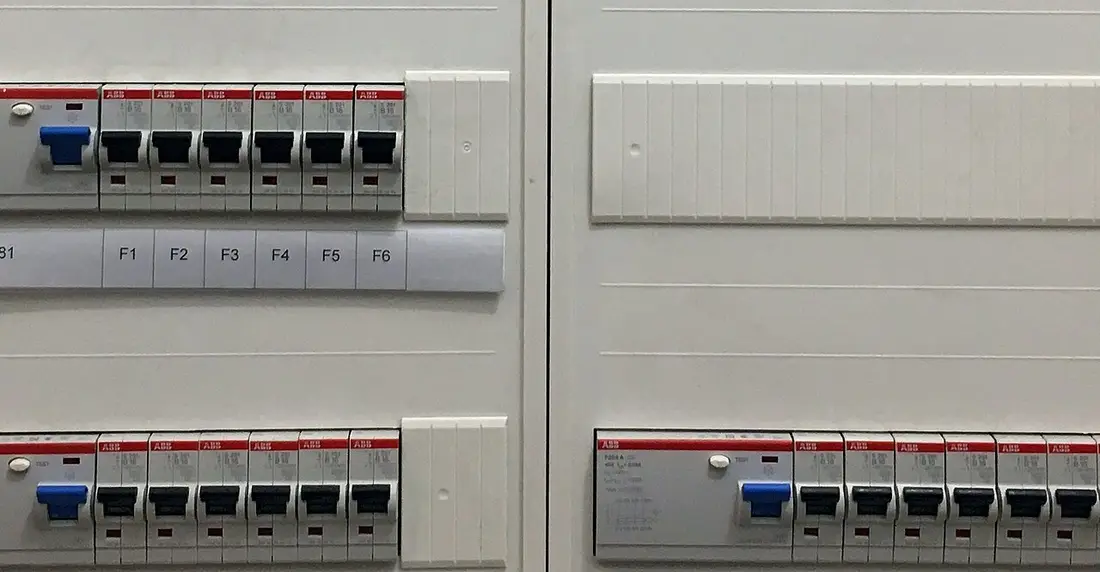
Fuses protected houses honestly for decades, but a fuse box cannot carry modern loads, modern protection types, or most insurance conversations - its replacement is a matter of timing, not debate.
Problem: Fuses protected houses honestly for decades, but a fuse box cannot carry modern loads, modern protection types, or most insurance conversations - its replacement is a matter of timing, not debate.
Solution: The decision inputs are concrete: the box's capacity against the house's loads, the availability of its fuse types, the insurance position, and the projects - chargers, spas, additions - queuing at its door.
When to call: Call for a panel assessment when a fuse blows repeatedly, when an insurer asks, when a sale or purchase is coming, or before any major load is added.
Thousands of Oklahoma City homes still run on fuse boxes, and thousands more run on the first generations of breaker panels that replaced them - including families of panels from the postwar decades that inspectors now flag on sight. The homeowner's question sounds simple: keep it, or replace it? It deserves a better answer than a sales pitch in either direction. This guide lays out what each system does, where each one's honest limits sit, and the arithmetic metro homeowners actually use to decide.
The Oklahoma City Angle
Oklahoma City sits on the southern plains where Gulf moisture runs into dryline storms, and the weather writes the electrical calendar here: a spring supercell season that tests every service mast and overhead drop in the metro, a summer of peak cooling loads, a second severe season in the fall, and winters that can wrap the whole city in ice. An electrical system in Oklahoma City is not judged on a mild day - it is judged in the storm weeks, and the pages here are organized around that.
What Fuses Did Well, and Where Their World Ended
A fuse is an honest device: a calibrated weak link that melts under the overload or fault it was sized to interrupt, every time, with no mechanism to wear. Fuse boxes protected the metro's streetcar suburbs and postwar houses through decades of faithful service, and a well-kept fuse box on a light-load house is not a hazard - it is an antique doing its job. Respect where respect is due.
Its world ended by arithmetic and by ecosystem. Modern houses draw loads the fuse box's 60 or 100 amps cannot schedule; modern protection - ground-fault and arc-fault types - exists in breaker form factors the box cannot host; the correct fuse types grow scarce while the temptation grows to substitute whatever fits, which is how fuse boxes get hurt, one oversized fuse at a time. Add insurers, who price what they cannot verify, and the fuse box's remaining question is not whether but when - a retirement to schedule on your calendar rather than an event's.
The Breaker Generations, Including the Flagged Ones
Breaker panels arrived in generations, and they are not interchangeable in reputation or in fact. The mainstream generations age ordinarily - breakers weakening across decades, bus condition grading the panel's remaining life. But two broad families of postwar panels, installed across this metro by the tens of thousands in the building booms, developed a documented failure: breakers that can fail to trip under overload, removing the protection the panel exists to provide. Inspectors, insurers and electricians have treated those families as replacement candidates since the evidence settled, and they are identified by make and era in seconds, in person.
This is why 'breaker panel' is not a complete answer to the fuse box question. A house can trade a fuse box's honest limits for a flagged panel's hidden one if the replacement is chosen carelessly - and it is why the assessment conversation is about specific equipment: which panel, which generation, what condition. The good news is that modern panels are unremarkable in the best way: protection types for every circuit class, capacity the modern house can schedule, parts on every shelf in the metro.
PROBLEM
→
SOLUTION
The Decision, in the Order Homeowners Actually Make It
The inputs, honestly ordered: safety first - a fuse box being fed wrong-sized fuses, or any panel with heat damage, corrosion or breakers that misbehave, is decided already. Capacity second - list the house's present heavy loads and the ones visibly coming; if the sum argues with the service size, the arithmetic is the decision. Paperwork third - insurance renewals, sales and purchases all price the panel they find, and a documented modern panel is the version of the house nobody argues with. Projects last - the charger, the spa, the addition each queue at the panel, and settling the panel first converts them from negotiations into installations.
What the decision rarely is: a fashion. Panels are not replaced because they are old, any more than fuse boxes are kept because they are venerable. They are replaced when their protection, their capacity or their paperwork stops serving the house - and kept, calmly and with a clear conscience, while all three still do. The assessment's job is to grade your specific equipment against those three tests and report, not to reach a verdict the showroom prefers.
The Fuse Box in the Wild: Three Houses, Three Answers
Consider the fuse box's real population. The light-load cottage whose box has served since the war, correctly fused, feeding lights and a refrigerator - a keeper, with spares in the drawer and a date with the conversation at the next project. The postwar ranch whose box now schedules a heat pump, a range and a dryer by blowing fuses in rotation - decided by arithmetic, this year. And the rental whose box bears the scars of substituted fuses and a tenant's ingenuity - decided by safety, immediately. Same equipment class, three verdicts, each earned by the house around the box.
Panels repeat the lesson in the other direction: the sound modern panel that will serve thirty more years, the mid-life panel needing capacity rather than replacement, and the flagged family whose breakers cannot be trusted to trip. 'How old is it' is the least useful question in this entire subject; 'which one is it, in what condition, feeding what loads' is the whole consultation.
The Upgrade's Hidden Half: Mast, Meter and Ground
A panel replacement is rarely only a panel. The meter base and mast that feed it carry their own ages; the grounding system - rods, bonds, the water-pipe connection of another era - is renewed to current practice in the same project; and the service's size decision commits the house for decades. Proposals that price the cabinet alone are describing the visible third of the job. The complete scope, named in advance, is what separates a replacement from a renovation of the service itself.
This is also the moment the house's future loads deserve their sentence in the plan: the charger penciled for next year, the spa argued about at dinner, the addition in the sketchbook. Capacity bought during a panel project costs the least of any capacity the house will ever purchase, because the crew, the permit and the outage are already paid for. Owners who name the future in the assessment rarely reopen the panel question; owners who do not, reopen it at the next project.
Myth vs Fact
The Myth
A fuse box that has worked for sixty years has proven itself - if it were dangerous, something would have happened by now. The argument from survival is the fuse box's most common defense, and it is honestly meant.
VS
The Fact
Survival proves the past loads, not the present ones. The box has not been tested by the house it now feeds - the heat pump, the range, the charger, the decades of substituted fuses. Its verdict belongs to the loads and the condition of today, which is why the assessment reads both before honoring either the defense or the prosecution.
The Related Service, In Depth
A panel upgrade should be judged the way the house will judge it: on the hottest evening of July, in the third storm week of May, with the charger running and the dryer tumbling. By that measure, the panel's label is the junior partner. The senior partners are the load calculation, the grounding, the condition of the mast and meter base, and the honesty of the directory - the invisible work that decides whether the visible cabinet ever gets to show what it can do.
That is the service side of this guide's subject. When you are ready, the Breaker Panel Upgrade page carries the process, the coverage by neighborhood and the number to call.
The Process, Step by Step
Identify what you have
Fuse box or panel, make and era, service size. A photograph of the open panel's label answers most of it; the assessment confirms.
Grade its condition
Heat marks, corrosion, wrong-sized fuses, breakers that feel loose or fail to trip-test - the physical evidence outranks the age.
Do the load arithmetic
Present heavy loads plus the ones coming, against the service's capacity. The sum is the decision's spine.
Check the paperwork horizon
Insurance renewal, sale, purchase, permits for queued projects - the dates that make 'someday' into a schedule.
Prevention Checklist
Never substitute a larger fuse for a blowing one; the fuse's size is the wire's limit, and the wire does not negotiate.
Keep correct spare fuses for a fuse box you keep, of its exact types - scarcity is how substitutions begin.
Learn your panel's make and era before an insurer or inspector introduces you to them.
Label the directory at every change, fuse box or panel; the next person troubleshooting at midnight is the beneficiary.
Schedule the replacement conversation in a calm season; panels replaced on the owner's calendar cost less in every currency than panels replaced on an event's.
A Field Checklist for Your Own Home
Read the panel or box for its maker's marks and any heat discoloration, and photograph both.
List the house's present big loads honestly - range, dryer, heat, AC, and anything with a motor or a heater.
Notice fuse substitutions and blown-fuse frequency; both are the box's own report.
Name the next five years of loads - charger, spa, addition - before any capacity conversation.
What the Paperwork Should Show
The assessment visit grades identity, condition and arithmetic in one pass, and its deliverable is the verdict with its reasons: keep with conditions, feed differently, or replace - and if replace, at what service size and with what mast, meter and grounding scope attached. Panel replacement itself is scheduled work with utility coordination where the service is touched, and it is quoted as the whole job, so the household compares complete scopes rather than cabinet prices.
Owners prepare by clearing the panel's surroundings, listing the honest load inventory including the future, and digging out any insurer or closing correspondence the panel has attracted. The visit's questions are predictable; the household that has answered them on paper gets a verdict it can act on in the same conversation.
How a Professional Works This Problem
A professional grades a fuse box or an old panel on three axes and reports all three: the equipment's identity and physical condition, the load arithmetic of the house it feeds, and the paperwork horizon of insurer, sale and permits. Identity takes seconds and rules whole families in or out; condition is read in heat marks and corrosion; arithmetic is done with the household's real loads on the table. A verdict that skips an axis is an opinion; one that covers all three is an assessment the household can schedule a decade around.
Mistakes That Make It Worse
Defending a fuse box by its survival while feeding it the modern house: The box's past loads acquit its past, not its present.
Replacing a panel like-for-like when capacity was the disease: A new cabinet with the old arithmetic is a recurring appointment, not a solution.
Buying the panel before the mast, meter and grounding are read: The visible third of the job priced as if it were the whole.
Letting an insurer's letter make the decision in a panic week: The same replacement, scheduled calmly, is cheaper in money and in choices.
The Bottom Line
Whether your house keeps its fuse box, feeds it less, or retires it with honors, the decision deserves the three readings - identity, condition, arithmetic. Houses decided that way rarely revisit the question; houses decided by habit revisit it at the least convenient moments.
Metro outages are written by documented weather: spring supercells, the May 1999 and May 2013 tornadoes on the south side, and ice storms in December 2007 and October 2020 that darkened districts for days.
A home charger is among the largest continuous loads a house carries, so installation starts with a load calculation at the panel - the arithmetic that decides the charge rate your house can honestly feed.
Is a fuse box illegal or against code in Oklahoma City?
Existing fuse boxes are generally grandfathered - code governs new work and alterations, not the retroactive condemnation of installed equipment. The practical pressures are different: insurers may surcharge or decline them, buyers offer less for them, and any significant electrical project will reopen the panel question with the permit office. Legal to keep and wise to keep are separate grades, and this guide is about the second.
How do I know if my breaker panel is one of the flagged families?
By its make and era, which an electrician identifies on sight - the flagged families were installed widely in the postwar building decades, and their breakers' failure mode is precisely that there may be no symptom to notice from outside. If your home was built or re-paneled in those decades and the panel has never been identified, that identification is a short visit with an outsized shadow: everything else in this guide proceeds from it.
What size panel does a modern Oklahoma City home need?
The load calculation decides, and for most metro homes carrying modern loads - electric cooking, laundry, heat and air, with a charger or spa in the plan - the answer lands at 200 amps, the modern standard service. Smaller homes with gas appliances and no additions can be honestly served below it. What you are buying is headroom: the distance between the house's arithmetic and its service's limit, wide enough that the next decade's loads are a plan rather than a crisis.
Can I replace just the panel and keep my service size?
Yes - a like-for-like panel replacement changes the equipment without changing the capacity, and it is the right scope when the old panel is flagged or failing but the service size honestly fits the house. When capacity is the problem, the service upgrade is the honest scope. The assessment separates the two, because they are different projects with different numbers, and selling one as the other helps no one past the invoice.
Please note: Oklahoma City Electrician is an independent directory and referral service, not an electrical contractor. The professionals reachable through this site are independent businesses; any agreement for work is between you and the professional you engage. Service information on this site is general educational material - the scope of any real electrical work is set by an on-site inspection.
A Breaker That Keeps Tripping, Lights That Flicker or a Panel Due for an Upgrade?
One call connects you with an electrical professional serving Oklahoma City and the surrounding metro communities - assessment, repair, service and installation.