Oklahoma City Electrical Services

Smoke and CO Detectors in Oklahoma City, OK

Smoke and carbon monoxide detectors in Oklahoma City - hardwired, interconnected protection placed where the metro's homes actually need it, and kept current past its silent expiry dates.

The storm ledger is documented, not folklore. On May 3, 1999, an F5 tornado crossed Bridge Creek and Moore with winds measured above 300 miles per hour; on May 20, 2013, an EF5 crossed Newcastle and Moore on a similar path. Ice storms in December 2007 and October 2020 brought down lines and trees across the metro and left neighborhoods dark for days. Oklahoma also sits in one of the more lightning-active regions of the country. Surge damage, standby power and service-mast condition are standing topics here because the record made them so.

The second force is the modern load arriving in old houses. Electric vehicle chargers, hot tubs, home offices, workshop tools and added living space all draw on panels that were sized for a fraction of today's demand - a 100-amp service that was generous in 1955 is an arithmetic problem in a house with two chargers and a spa. Much of the metro's electrical work is this reconciliation: reading what a house now asks of its system, and matching the system to it honestly.

Signs You Need Smoke and CO Detectors

A detector is past its date

Every detector carries a manufacture date, and its sensor's reliable life runs from that date, not from when it was installed or when its battery last changed. A house full of undated or decade-old units is running on expired protection.

Chirping that a new battery does not cure

The end-of-life chirp is a different signal from the low-battery chirp, and it does not stop for batteries. It is the device announcing its own retirement - correctly, and on schedule.

Detectors exist on one floor only

Smoke rises and CO mixes; protection placed on a single floor of a multi-level house leaves the sleeping floors - where protection matters most - to luck and hallway acoustics.

Units are not interconnected

Island detectors warn the room they are in. Interconnected units - wired or wireless - warn the whole house when one senses, which is the difference between a kitchen incident and a 3 a.m. household alarm.

A fuel-burning appliance has no CO coverage nearby

Furnaces, fireplaces, gas water heaters and attached garages each argue for CO detection placed by the rules of the gas - and older metro homes are commonly missing it exactly where it belongs.

Detectors were removed, painted or taped over

The silenced detector is a fixture of renovation history: unplugged for cooking smoke, painted in a remodel, battery borrowed for a remote. Each one found is a small restoration of the house's safety net.

Why Smoke and CO Detectors Is a Standing Job in Oklahoma City

The metro's detector stock mirrors its housing: builder-installed hardwired units in the newer subdivisions, now aging past their sensor lives in waves; battery units of every vintage in the older districts; and rental stock where detector condition turns over tenants faster than owners. Each wave arrives at expiry together, because it was installed together.

Winter writes the CO chapter: the first cold weeks light every furnace and fireplace in the metro at once, and the season's CO calls follow the heating map. The detector system's job is to be already installed, already placed and already current when that week arrives.

Renovation is the third force - kitchens moved, garages attached, basements finished into bedrooms. Detector placement drawn for the old floor plan quietly stops matching the house that exists, and the walk that redraws it is the simplest safety work in this entire catalog.

Smoke and CO Detectors Through the Oklahoma City Year

Spring is storm season and preparation season at once. March through May is the peak of the supercell calendar, when the metro's outages, surge events and downed service drops concentrate. The electrical work that matters happens just ahead of it: panels checked, surge protection in place, standby generators serviced and exercised, and trees near the service drop reported before the wind finds them. The first big storm week of the year grades every home's preparation without mercy.

Winter in Oklahoma City is mild until it is not: the ice storms are the season's defining electrical events, when coated lines and falling limbs take down drops and masts across whole districts at once. Between storms, the winter load story is space heaters on bedroom circuits, holiday lighting on old exterior outlets, and heating equipment running its longest hours - each a small test of circuits that sit idle the rest of the year.

Summer is the load season. Air conditioning runs from morning to past midnight across the metro, panels carry their heaviest sustained draw of the year, and the weak points announce themselves: breakers that trip on hot afternoons, connections that warm under load, attic wiring baking in the day's heat. Lightning rides the same months. Most electrical failures are discovered in summer - the wear happened across years, and the peak-load week is simply when the margin runs out.

Smoke and CO Detectors in Depth

Detectors deserve their reputation as the least interesting and most consequential devices in the house: their entire virtue is exercised on the one night in a decade when they are needed, and their entire risk is that they age in silence toward that night. The management of that risk is calendrical, not technical - dates read, units replaced on schedule, placement redrawn when the house changes.

The second truth is that detection is a system, not a count. One sensing unit warning one room is a product; interconnected units warning every sleeper, placed where smoke travels and CO gathers, backed by a file that knows their ages, is a system. The distance between the two is one planning walk - which is why detector work is sold here as a walk and a map, not as boxes off a shelf.

Choosing the Right Help

Choose detector help by the dates. The professional who walks the house reading manufacture dates and redrawing placement from the floor plan is selling a system; the one who counts boxes from the doorway is selling boxes. Ask for the replacement calendar in writing. In a trade whose entire product is a future night, the calendar is the deliverable - the units are just how it arrives.

The Conditions Behind It

Oklahoma City sits on the southern plains where Gulf moisture runs into dryline storms, and the weather writes the electrical calendar here: a spring supercell season that tests every service mast and overhead drop in the metro, a summer of peak cooling loads, a second severe season in the fall, and winters that can wrap the whole city in ice. An electrical system in Oklahoma City is not judged on a mild day - it is judged in the storm weeks, and the pages here are organized around that.

The metro's wiring is a layered archive of its building history. The streetcar suburbs of the 1900s through the 1930s still hold knob-and-tube runs, cloth-insulated cable and fuse boxes. The postwar decades built whole districts on 100-amp panels, including panel families from that era that inspectors now flag on sight. The mid-1960s to the mid-1970s added aluminum branch wiring to thousands of homes. And the growth edges build at 200 amps with chargers and standby generators planned from the start. Which layer a house sits in decides most of its electrical story.

How Smoke and CO Detectors Works

Walk the whole house

Every detector located, dated and tested - smoke and CO, hardwired and battery - and the sleeping areas, halls and appliance zones mapped against the placement the house actually needs.

Draw the protection plan

Which units to replace, which to add, where interconnection matters, and how the hardwired and wireless options fit your home's construction - in writing.

Install and interconnect

Units fitted, hardwired where the plan calls for it, interconnection verified so one sensing unit raises the whole house.

Test and date the system

Every unit test-fired, its dates recorded in your house file, and the replacement calendar handed over - so the next expiry is an appointment, not a discovery.

Doing It Yourself vs a Professional

The DIY Route

  • Replacing a hardwired detector with a battery unit because the connector differs downgrades the system and orphans its interconnection
  • Placing detectors by convenience - near the kitchen for the smoke, the garage door for the CO - instead of by where the gases travel
  • Trusting a detector because its light is on; the light reports power, not a live sensor
VS

The Professional Route

  • Dates every unit in the house before recommending anything - age is the first fact of this trade
  • Draws the placement map from the floor plan and the fuel-burning appliances, not from a box count
  • Verifies interconnection end-to-end, so the system's promise is tested, not assumed

Keep It From Coming Back

Detection fails by calendar and by silence. These habits - dates, tests, placement reviews - are the entire difference between owning detectors and being protected by them.

  • Write each detector's manufacture date in the house file the day it is installed; memory is not a tracking system.
  • Test detectors monthly with their own buttons, and treat any unit that fails its test as replaced, not negotiated with.
  • Never borrow a detector's battery, and never silence a chirping unit by removing it - the chirp is the message, and the message is cheap to answer.
  • When a fuel-burning appliance is added or a garage is attached, revisit CO placement in the same project, not at the next winter.
  • After any renovation that moves walls, doors or bedrooms, redraw the detector map; placement follows the floor plan, not the history.
  • Replace the whole set on its calendar when a house's units share an age - they were installed together, and they retire together.

Smoke and CO Detectors in the Surrounding Communities

The communities around Oklahoma City share its storm seasons and its lightning - with their own twists of housing age, growth and grid exposure.

Smoke and CO Detectors in Edmond

Edmond is the metro's northern anchor city, a station stop founded with the 1889 land run that has grown into one of Oklahoma's largest cities around the University of Central Oklahoma and its Old North tower. Its housing runs in rings: pre-war streets near downtown and the university, postwar and golf-course subdivisions through the middle decades, and large-lot and new construction toward Arcadia Lake and the Logan County line.

Smoke and CO Detectors in Norman

Norman is the metro's southern anchor, a land-run city built around the University of Oklahoma, whose Bizzell Library and South Oval sit a few blocks from the pre-war neighborhoods of the original townsite. Game-day Norman and everyday Norman share the same streets: student rentals and faculty houses near campus, postwar subdivisions through the middle, and growth pushing east toward Lake Thunderbird.

Smoke and CO Detectors in Moore

Moore is the south-metro city between Oklahoma City and Norman, and it is the metro's tornado landmark: the May 3, 1999 F5 and the May 20, 2013 EF5 both crossed the city, and whole districts were rebuilt after each. Old Town's pre-war blocks, the postwar subdivisions around them, and the rebuild neighborhoods stand side by side, and Moore's building stock cannot be understood without the storm map.

Smoke and CO Detectors in Midwest City

Midwest City was founded in 1942 as a purpose-built community for Tinker Air Force Base, one of the first planned suburbs of its kind in the country, and the base still anchors its economy along SE 29th. Its original housing is wartime and postwar construction at scale - whole districts of similar houses built in a handful of years - with later decades of subdivisions filling in around them.

Where Smoke and CO Detectors Is Needed Most

In the historic core and the central neighborhoods - Downtown Oklahoma City, Bricktown, Midtown, Heritage Hills, Paseo Arts District and Uptown 23rd, Crown Heights, Belle Isle, Gatewood, Nichols Hills - the wiring runs from knob-and-tube and fuse boxes in the pre-war districts to the flagged postwar panels of the in-city suburbs, and smoke and co detectors follows that record: era wiring care on the old streets, panel decisions in the postwar blocks, and storm exposure that grows toward the open edges.

Across the north side, the lake country and the inner ring - The Village, Quail Creek, Warr Acres, Lake Hefner, South Oklahoma City, Capitol Hill and Stockyards City, Adventure District, Bethany, Mustang, Yukon, Piedmont - sit the growth waves of the 1960s onward, the aluminum-branch-wiring years and the first subdivisions wired for modern loads room by room, which together make this the steadiest smoke and co detectors territory in the metro.

Beyond the city line, the same work runs in Edmond, Norman, Moore, Midwest City, Del City, Deer Creek - fast-growing suburbs, university and base communities and prairie-edge towns where new construction, acreage homes and wide-open storm exposure add their own chapters. Every one of these area pages carries the local detail for smoke and co detectors in that community.

Coverage, In Full

Smoke and CO Detectors runs across the whole service map: Downtown Oklahoma City and Bricktown; Midtown and Automobile Alley; Heritage Hills and Mesta Park; the Paseo Arts District; Uptown and NW 23rd; Crown Heights; Belle Isle; Gatewood and the Plaza District; Nichols Hills; The Village; Quail Creek; Warr Acres; the Lake Hefner shore; South Oklahoma City; Capitol Hill; Stockyards City; the Adventure District; and beyond the city in Bethany, Mustang, Yukon, Piedmont, Edmond, Norman, Moore, Midwest City, Del City and Deer Creek. One call covers all of it - the local pages above carry the detail for each. If your street is not named here, call anyway: routes grow with demand, and most metro addresses are already within reach of a scheduled run.

From the Oklahoma City Electrical Guides

Smoke and CO Detectors: Placement, Expiry Dates and Testing

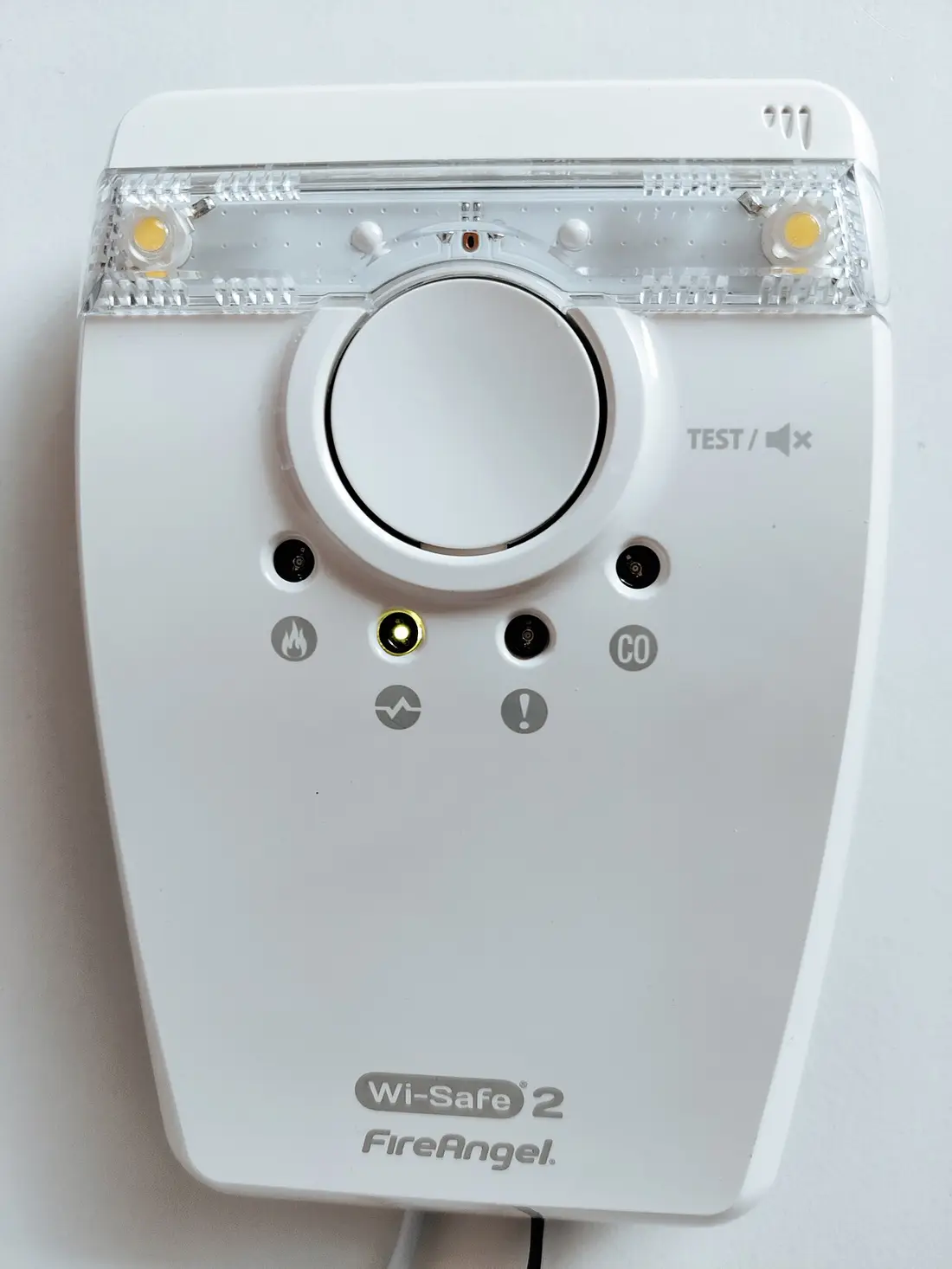
Detector sensors expire: smoke alarms are replaced at about ten years from manufacture, CO alarms commonly at five to seven - whether or not they still chirp reassuringly when tested. Placement follows the gases: smoke alarms in every bedroom, outside sleeping areas and on every level; CO alarms outside sleeping areas and on levels with fuel-burning appliances.

Read the Guide

Why Do My Lights Flicker? An Oklahoma City Guide to Causes and Fixes

Most flicker is a pattern with a cause: dimming when large appliances start is a load story, flicker on one dimmed circuit is usually a lamp-and-dimmer mismatch, and random flicker across the house is a connection story. Read the pattern before touching anything - when it happens, where it happens, and what else is running sorts the causes faster than any tool.

Read the Guide

Power Outages, Storms and Standby Generators: An Oklahoma City Guide

Metro outages are written by documented weather: spring supercells, the May 1999 and May 2013 tornadoes on the south side, and ice storms in December 2007 and October 2020 that darkened districts for days. A standby generator answers the outage with a load list, not a whole house by default: heat, refrigeration, water, lights and the loads that cannot wait, sized and fueled honestly.

Read the Guide

Smoke and CO Detectors Questions

What affects the cost of detector work in Oklahoma City?

The unit count, whether hardwiring exists where the plan needs it, interconnection method, and whether the work rides with other electrical projects or stands alone. A hallway replacement and a whole-house hardwired system share a category and nothing else; the plan drawn at the walk is what gets priced.

Can you add detectors where there are none in my older home?

Yes - older homes are the normal case, not the exception. Where ceiling wiring exists or can be fished, hardwired interconnected units go in; where it cannot, modern wireless-interconnect units deliver the same whole-house warning without opening walls. The plan names which rooms get which, and why.

My detectors keep going off when I cook. Should they be moved?

Placement has known answers for kitchen-adjacent smoke alarms - distance from the cooking source, the right sensor type for the location, and ventilation's role - and nuisance alarms are worth solving properly, because the household that silences its detector has traded protection for quiet. The walk reads your kitchen's layout and prescribes placement and sensor type, not tape and removal.

Do rental properties in Oklahoma City have detector requirements?

Owners carry obligations for working smoke detection in rental housing, and CO requirements apply where fuel-burning appliances or attached garages are present. The service visit documents what is installed, its dates and its test results - the file a landlord actually needs - and brings the property to its standard in the same pass.

How long do smoke and CO detectors last in Oklahoma City?

Smoke alarms are generally replaced at about ten years from their manufacture date, and CO alarms sooner - commonly five to seven years, by the maker's marking on the unit. The dates are printed on every device; the service visit reads them all and gives you the household's actual calendar, which in most metro homes turns out to be overdue in at least one room.

Should detectors in Oklahoma City be hardwired or battery powered?

Hardwired with battery backup, interconnected, is the standard newer construction is built to and the target older homes are upgraded toward: it removes the dead-battery failure and makes one sensing unit warn the whole house. Quality battery and wireless-interconnect units are the honest option where wiring cannot reasonably go. The plan for your house is drawn from its construction, not from a preference.

Where do CO detectors belong in my Oklahoma City home?

Outside the sleeping areas and on every level, with attention to the zones near fuel-burning appliances - furnace, water heater, fireplace - and the attached garage's boundary. Placement follows the maker's height and distance guidance for the gas's behavior. The walk that places them also inventories your appliances, because the appliance map is the CO map.

Why does my detector chirp even with a new battery in Oklahoma City?

Because the chirp is probably not about the battery: end-of-life signaling is built into detectors precisely so an expired sensor cannot be silenced into continued service by fresh batteries. Check the manufacture date on the unit - if the date says the sensor's life is over, the chirp is the device doing its final job correctly.

Please note: Oklahoma City Electrician is an independent directory and referral service, not an electrical contractor. The professionals reachable through this site are independent businesses; any agreement for work is between you and the professional you engage. Service information on this site is general educational material - the scope of any real electrical work is set by an on-site inspection.

A Breaker That Keeps Tripping, Lights That Flicker or a Panel Due for an Upgrade?

One call connects you with an electrical professional serving Oklahoma City and the surrounding metro communities - assessment, repair, service and installation.

📞 Call Now
📞 Call Now